
MS Mobility Devices: A Beginner’s Guide to Mobility and Home Supports

When people hear the phrase MS mobility devices, they often picture a worst-case scenario.
They imagine decline. Dependence. A loss of freedom.
But the truth is often the exact opposite.
For many people living with Multiple Sclerosis, mobility devices do not take independence away — they give it back. They make it possible to move through the world with more safety, less exhaustion, and more confidence. They can reduce falls, protect energy, and help you keep doing the things that matter to you.
This beginner’s guide will walk you through the most common MS mobility devices, including canes, walkers, rollators, wheelchairs, scooters, braces, and home supports like grab bars. We’ll talk about what each device does, who it may help, how to think about the emotional side of using one, and how to stay safe while adapting.
If you’ve been wondering whether a mobility device might help you or someone you love, this guide is for you.
What Are MS Mobility Devices?
MS mobility devices support movement, balance, safety, and independence for people living with Multiple Sclerosis.
Because MS can affect walking, strength, coordination, balance, endurance, and fatigue, mobility needs can change over time and from day to day. Some people need support only on bad days or for longer outings. Others use mobility devices more regularly.
These devices are not all-or-nothing. They are not a sign that you have “given up.” They are supports that can help you move through daily life with less risk and more control.
Common MS mobility devices include:
- Canes
- Walkers
- Rollators
- Wheelchairs
- Scooters
- Braces, such as AFOs for foot drop
- Grab bars and other home safety supports
The right tool depends on your symptoms, lifestyle, environment, and goals.
Why People With MS Use Mobility Devices
MS affects everyone differently, but there are some common reasons people begin exploring mobility devices.
You may benefit from MS mobility devices if you experience:
- Balance problems
- Foot drop
- Muscle weakness
- Leg heaviness
- Spasticity
- Dizziness
- Fatigue that gets worse with walking
- Frequent stumbling or tripping
- Fear of falling
- Difficulty standing for long periods
Sometimes the goal is a better balance. Or it is energy conservation. Sometimes it is simply making daily life feel less stressful.
A mobility device does not have to solve every problem to be helpful. If it makes one part of your day easier, that matters.
Canes for MS
A cane is often one of the first MS mobility devices people try.
What a cane can help with
A cane can provide:
- Extra balance
- More confidence while walking
- Reduced fear of falling
- Support on uneven ground
- A little relief for one weaker side of the body
For some people with MS, a cane is useful only on certain days or in certain places, like grocery stores, crowded spaces, parking lots, or outdoor events.
Who it may help
A cane may help if you:
- Feel slightly unsteady
- Have one side that feels weaker
- Notice more balance trouble when tired
- Want light support without using a larger device
Emotional adjustment
Many people resist using a cane at first. Not because it does not help, but because of what it feels like it means.
A cane can feel visible. It can feel symbolic. It can stir up grief or embarrassment.
But for many people, once they begin using one, the emotional story changes. The cane stops feeling like a label and starts feeling like a tool. A practical, helpful, freedom-giving tool.
Walkers for MS
Walkers offer more support than canes and can be helpful when balance and stability are more significant concerns.
What a walker can help with
A walker can provide:
- Stronger full-body support
- More stability than a cane
- Better confidence indoors and outdoors
- Safer walking when balance feels unpredictable
Standard walkers usually need to be lifted slightly as you move. This works well for some people, but not for everyone.
Who it may help
A walker may help if you:
- Feel very unsteady while walking
- Need more than light balance support
- Have weakness in both legs
- Feel unsafe with a cane alone
Things to consider
A standard walker may be harder to use if you also deal with arm weakness, severe fatigue, or coordination challenges. In those cases, a rollator may be more practical.
Rollators for MS
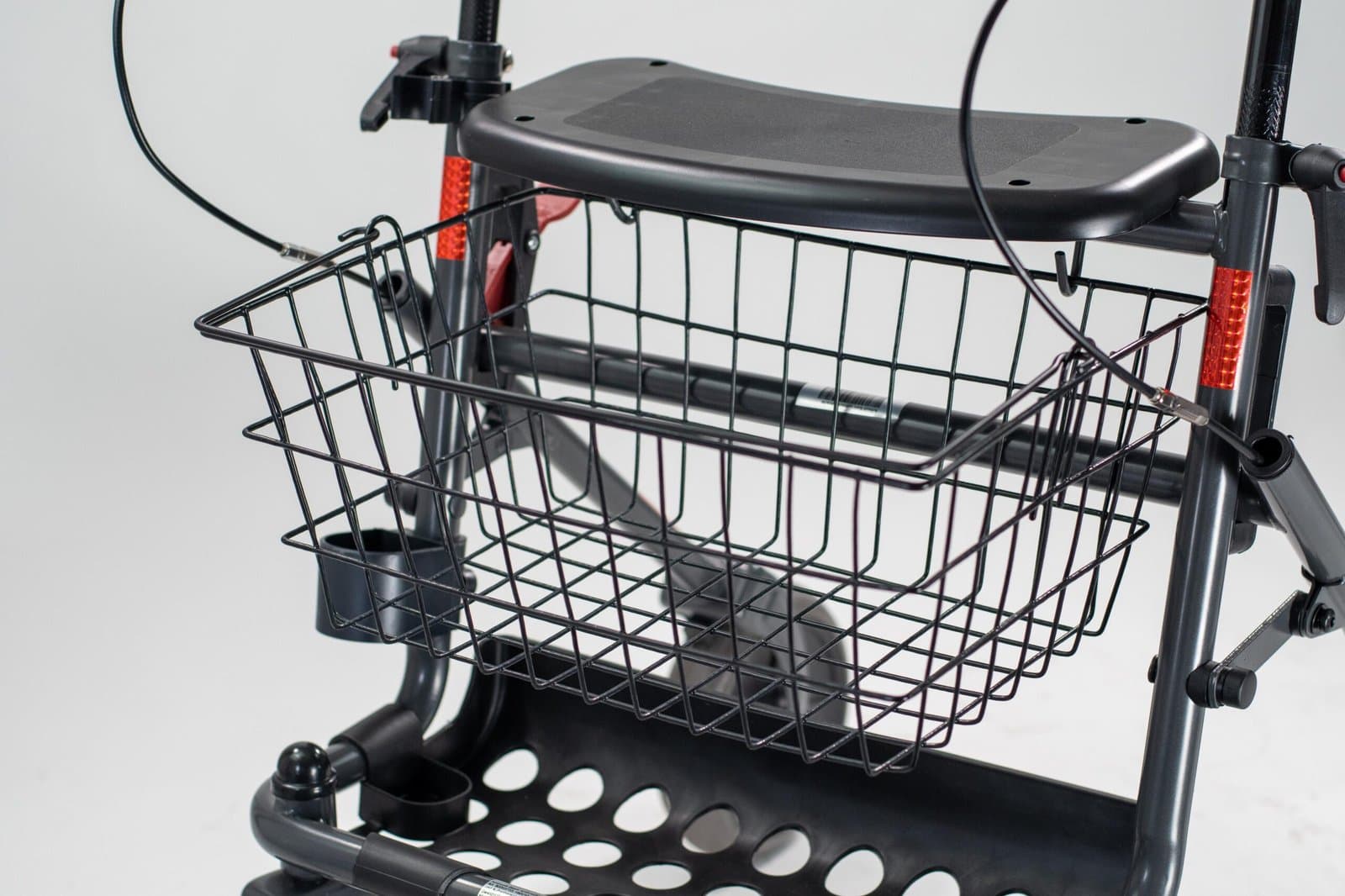
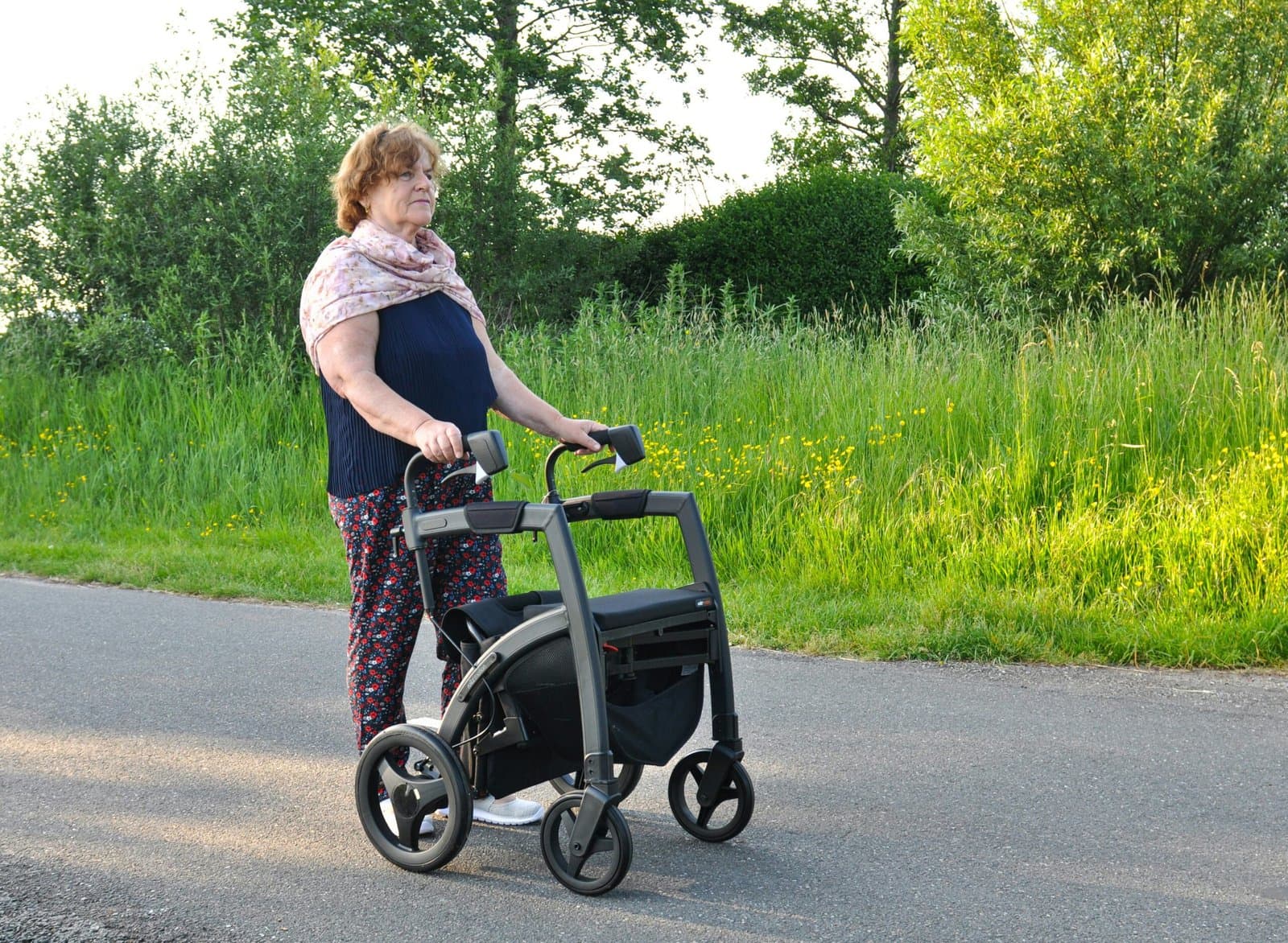
A rollator is a walker with wheels, hand brakes, and usually a built-in seat.
For many people, this is one of the most useful MS mobility devices because it offers both support and energy conservation.
What a rollator can help with
A rollator can provide:
- Walking support
- A place to sit and rest
- More confidence during longer outings
- Help with pacing energy
- Better endurance in stores, airports, and appointments
Who it may help
A rollator may help if you:
- Need walking support and regular rest breaks
- Get fatigued quickly
- Avoid outings because standing is too hard
- Want more independence outside the house
Why people love them
The built-in seat can be life-changing. When fatigue hits, you do not have to hunt for a bench or pretend you are okay. You already have a place to sit.
That alone can make public outings feel far less stressful.
Wheelchairs for MS
Wheelchairs are often misunderstood. Many people assume that using a wheelchair means someone has completely lost mobility. That is not true.
Some people use wheelchairs full-time. Others use them part-time for longer distances, bad symptom days, travel, or energy conservation.
What a wheelchair can help with
A wheelchair can provide:
- Safer mobility
- Major energy conservation
- Less strain on weak or spastic legs
- More access to community activities
- Greater participation in events, travel, and daily life
Who it may help
A wheelchair may help if you:
- Can walk only very short distances
- Experience frequent falls
- Get severely fatigued from walking
- Avoid activities because of walking limits
- Need support for longer outings
Part-time wheelchair use is valid
This is important: you do not have to be “unable to walk” to benefit from a wheelchair.
Using one for long days, crowded places, airports, museums, or symptom-heavy periods can help protect your energy and expand your life.
That is not failure. That is a strategy.
Scooters for MS
Scooters are another common option among MS mobility devices, especially for people who want support over longer distances without needing a manual wheelchair.
What a scooter can help with
A scooter can provide:
- Greater independence outdoors
- Reduced walking fatigue
- Access to bigger spaces like malls, zoos, airports, and events
- More participation in family and social outings
Who it may help
A scooter may help if you:
- Can still walk short distances but not long ones
- Need support mainly for community access
- Get worn out quickly in large environments
- Want a device specifically for distance
Things to consider
Scooters are often best for people who have enough upper-body control and coordination to steer safely. Storage, transport, and accessibility also matter, so it is important to think about where and how you would use one.
Braces and AFOs for MS
Braces are often overlooked when people think about MS mobility devices, but they can make a huge difference.
One of the most common braces used in MS is an AFO (ankle-foot orthosis), which helps support the ankle and foot.
What braces can help with
Braces can provide:
- Better foot positioning
- Improved walking safety
- Support for foot drop
- Reduced tripping
- More efficient gait
Who it may help
A brace may help if you:
- Drag your toes when walking
- Catch your foot on the ground often
- Feel like one foot is “slapping” down
- Have ankle weakness or instability
Why they matter
A small brace can make walking smoother, safer, and less mentally exhausting. Instead of having to think about every single step, you may feel more supported and natural in your movement.
Grab Bars and Home Supports for MS
Not all MS mobility devices are used out in public. Some of the most helpful ones live inside the home.
Helpful home mobility supports include:
- Grab bars in the bathroom
- Shower chairs
- Raised toilet seats
- Bed rails
- Non-slip mats
- Handrails on stairs
- Transfer benches
What these supports can help with
These devices can make daily life safer by reducing:
- Fall risk
- Slipping in wet spaces
- Strain during transfers
- Fear while bathing or using stairs
Who they may help
Home supports may help if you:
- Feel unsteady in the shower
- Have trouble getting on and off the toilet
- Need support standing up from bed or a chair
- Worry about falling at home
These tools are often less emotionally loaded than public mobility aids, but they matter just as much. Safety at home is part of independence.
How to Know Which MS Mobility Device May Help
Choosing among MS mobility devices is not about picking the “most serious” option. It is about matching the tool to the challenge.
Here is a simple way to think about it:
- Cane: light balance support
- Walker: stronger stability support
- Rollator: walking support plus a seat for fatigue
- Wheelchair: safe mobility and energy conservation
- Scooter: distance support and community access
- Brace/AFO: support for foot drop or ankle weakness
- Grab bars/home supports: safer movement inside the home
Many people use more than one device depending on the situation. For example:
- A cane at home
- A rollator for stores
- A scooter for travel
- Grab bars in the bathroom
That does not mean your mobility is inconsistent. It means you are adapting intelligently.
The Emotional Side of Using MS Mobility Devices
Let’s talk honestly about the part that often matters most.
Using MS mobility devices can bring up grief, resistance, fear, or shame. You might worry about being judged or feel like your body is betraying you. You might think using a device means you are “getting worse.”
But mobility devices are not a moral issue. They are not a personal failure. They are not proof that you are weak.
These are tools.
And often, the hardest part is not learning how to use the device. It is learning how to let yourself be supported.
That emotional adjustment takes time. Be gentle with yourself.
You are allowed to grieve.
>You are allowed to adapt.
>You are allowed to want more support.
Safety Tips for Using MS Mobility Devices
No matter which MS mobility devices you use, safety matters.
Basic safety tips
- Make sure the device fits your height and body properly
- Use supportive shoes with a good grip
- Keep pathways clear at home
- Replace worn tips, brakes, or wheels as needed
- Do not wait until you are exhausted to use your device
- Ask for professional guidance if something feels off
A smart next step
If possible, work with a physical therapist or occupational therapist. They can help you:
- Choose the right device
- Fit it properly
- Learn how to use it safely
- Build strength and confidence around it
The right device used the wrong way can be frustrating. The right device fitted and taught well can be life-changing.
A Simple Checklist: Could an MS Mobility Device Help Me?
You may want to explore MS mobility devices if you answer yes to any of these:
- Do I avoid outings because walking feels too hard?
- Do I get exhausted from standing or walking?
- Do I trip, stumble, or feel afraid of falling?
- Do I lean on walls, furniture, or shopping carts?
- Do I feel less confident walking outside the house?
- Does one leg or foot feel weaker or less reliable?
- Would I do more if I had better support?
If you said yes to several, it may be time to talk with your doctor, physical therapist, or occupational therapist.
FAQs About MS Mobility Devices
1. What are MS mobility devices?
MS mobility devices are tools like canes, walkers, rollators, wheelchairs, scooters, braces, and grab bars that support safe movement and independence.
2. When should someone with MS start using a mobility device?
A mobility device may help when walking feels unsafe, exhausting, painful, or limiting. You do not need to wait until things get severe.
3. Is using a cane with MS a sign of getting worse?
Not necessarily. A cane is simply a tool that can improve balance, safety, and confidence.
4. What is the best mobility device for MS fatigue?
It depends on the person, but rollators, wheelchairs, and scooters can all help conserve energy.
5. Can I use a wheelchair part-time if I still walk?
Yes. Many people use wheelchairs part-time for longer outings, travel, or fatigue-heavy days.
6. What MS mobility device helps with foot drop?
A brace, such as an AFO, may help support the foot and reduce tripping.
7. What is the difference between a walker and a rollator?
A walker usually provides strong stability and may need lifting. A rollator has wheels and often includes a seat and hand brakes.
8. Are home safety supports considered mobility devices?
Yes. Grab bars, shower chairs, raised toilet seats, and bed rails all support safe movement at home.
9. How do I know which mobility device is right for me?
The best device depends on your symptoms, energy, balance, environment, and daily goals. A therapist can help assess your needs.
10. Do mobility devices reduce independence?
Usually the opposite. The right device often increases independence by making movement safer and less exhausting.
Support That Expands Your Life
Learning about MS mobility devices can feel emotional at first. It can force you to think about changes you did not ask for. But it can also open the door to something powerful: support that actually works.
A cane can help you walk more confidently.
A rollator can help you stay out longer.
A brace can help you trip less.
A wheelchair or scooter can help you say yes to life again.
These tools are not about giving in. They are about moving forward differently.
And differently is still beautifully, powerfully yours.
Recent Posts
Mobility Devices for MS Fatigue: What Helps Most
MARCH 26, 2026

Confidence With Multiple Sclerosis: Rebuilding Self-Trust
JANUARY 25, 2026

Multiple Sclerosis Symptoms: Early Signs, Invisible Challenges & Daily Changes
JANUARY 16, 2026

Walking With MS: How to Stay Safe, Steady, and Confident
DECEMBER 16, 2025
Living with Multiple Sclerosis: What Daily Life Can Look Like
DECEMBER 15, 2025