
Walking With MS: How to Stay Safe, Steady, and Confident

If you’re living with Multiple Sclerosis, you already know this truth:
Walking can change without warning.
One day you’re moving through your normal routine, maybe slower than you’d like, but still steady. Then out of nowhere, your leg feels heavy. Your foot catches the ground. Your balance feels “off.” Or fatigue hits so hard that walking across the room suddenly feels like climbing a mountain.
Walking problems in multiple sclerosis are incredibly common, and they can be one of the most frustrating parts of MS, because walking isn’t just physical movement. Walking is independence. It’s confidence. It’s freedom.
And when your walk changes, it can affect everything: your errands, your work, your social life, even how safe you feel in your own home.
The good news? You are not alone and there are real strategies and tools that can help.
This blog will break down why MS affects walking, what symptoms like foot drop, weakness, balance issues, spasticity, and fatigue can look like, and how to stay safe and supported while still living your life.
Why Walking Problems in Multiple Sclerosis Happen
MS affects the brain and spinal cord, disrupting the nerve signals that control movement. When those signals slow down or get scrambled, walking can feel harder, less coordinated, and less predictable.
According to the National MS Society, difficulty walking is one of the most common mobility limitations in MS, and “gait” issues can be influenced by multiple symptoms happening at once.
Walking may be affected by:
-
Muscle weakness
-
Spasticity (muscle stiffness or spasms)
-
Balance or coordination challenges
-
Sensory changes like numbness
-
Fatigue and reduced endurance
And what makes MS so challenging is that you may not deal with only one walking issue—you might experience several at the same time.
What Walking Changes Can Look Like in MS (And Why It’s Not “All in Your Head”)
Walking problems in multiple sclerosis can show up in different ways for different people. Some walking changes happen gradually over time. Others can feel sudden, especially during a flare or after a stressful, exhausting day.
Some people describe it as:
-
Feeling “wobbly,” like they’ve lost their usual rhythm
-
Dragging one leg or feeling one side is heavier
-
Tripping more often, especially on rugs or uneven ground
-
Needing to walk slower to feel safe
-
Getting tired far sooner than expected
And yes, sometimes it can even look like someone is intoxicated, when really they’re just trying to keep their balance and stay upright.
The Most Common Causes of Walking Problems in Multiple Sclerosis
Let’s break down the big ones you asked for, in plain language.
Foot Drop in Multiple Sclerosis
Foot drop is one of the most common and recognizable walking issues in MS.
It happens when the muscles that lift the front of your foot (and help you clear the ground) are weak or not getting strong nerve signals. Instead of lifting normally, your foot may drag or “slap” down.
This can make you trip because your toes catch the ground before your heel lands.
Signs you might have foot drop:
-
You catch your toes on the floor while walking
-
You feel like you have to “over-lift” your leg to avoid tripping
-
Your foot feels like it’s dragging or heavy
-
You scuff the ground more on one side
Supportive tips for foot drop:
-
Try walking slower and focusing on “heel first” steps
-
Avoid slippery socks or shoes without grip
-
Clear pathways at home (cords, rugs, clutter)
-
Ask your doctor or PT about an AFO brace (ankle-foot orthosis)
-
Look into functional electrical stimulation (FES) if recommended
Even small changes here can reduce falls and build confidence.
Muscle Weakness and MS Walking
Leg weakness in MS often shows up as:
-
Trouble climbing stairs
-
Feeling unstable on uneven ground
-
“Knees giving out” or buckling
-
Slower walking speed
MSAA lists weakness as one of the common contributors to walking difficulty, along with knee instability (buckling or hyperextension).
Supportive tips for weakness:
-
Use handrails whenever you can
-
Break walks into shorter segments (walk → rest → walk)
-
Avoid rushing (speed increases risk of falls)
-
Consider a cane for stability even on “medium” days
-
Ask for a referral to physical therapy for strength + gait training
Balance Issues and Walking Problems in Multiple Sclerosis
Balance problems can be subtle or severe and they can feel scary because they impact your safety instantly.
The National MS Society points out that walking difficulties can be tied to balance challenges and ataxia (coordination issues).
What balance problems might feel like:
-
Swaying while standing still
-
Feeling dizzy when turning quickly
-
Trouble walking in a straight line
-
Feeling worse in crowds or visually busy spaces (stores, sidewalks)
Supportive tips for balance:
-
Avoid multitasking while walking (phone + walking = riskier)
-
Slow down during turns
-
Use support in public places (shopping cart = underrated stability tool)
-
Try balance training exercises guided by a PT
-
Use the mobility aid that matches the environment (indoors vs outdoors)
Spasticity and Stiff Walking in MS
Spasticity is more than “tight muscles.” It’s a nervous system issue that can cause stiffness, spasms, and resistance to movement.
MS Canada explains that spasticity can be linked to increased muscle tone (hypertonia) and may affect mobility, sometimes helping, sometimes becoming disruptive when severe.
Spasticity can cause:
-
Stiff-legged walking
-
Legs that feel locked or resistant
-
Sudden spasms that throw you off balance
-
Pain or cramping during movement
Supportive tips for spasticity:
-
Stretch gently every day (especially calves, hamstrings, hip flexors)
-
Warm showers may help loosen muscles (unless heat worsens symptoms)
-
Keep walking sessions short but consistent
-
Ask your care team about spasticity treatment options (PT, medication, etc.)
-
Try slow movement like yoga or chair mobility work
Fatigue-Related Walking Changes in MS
This one matters because MS fatigue isn’t just “being tired.” It can change how your muscles fire, how coordinated you feel, and how safe you are when walking.
MSAA lists fatigue as a major factor that affects mobility and can feel overwhelming.
Fatigue-related walking problems can look like:
-
Dragging your legs late in the day
-
More stumbling after errands
-
Worse balance when you’re mentally drained
-
Needing longer recovery after short activity
Supportive tips for fatigue walking:
-
Do important walking earlier in the day when possible
-
Use mobility aids before you’re exhausted
-
Sit to do tasks whenever you can (laundry folding, cooking prep)
-
Plan your day with “recovery time” built in
-
Cool down regularly if heat worsens your symptoms
Mobility Aids for Walking Problems in Multiple Sclerosis (Yes, They Count as Strength)
Let’s say this clearly:
Mobility aids are not a last resort. They are a strategy.
They can help you:
-
Prevent falls
-
Reduce fatigue
-
Increase walking distance
-
Improve confidence in public
Common mobility supports include:
-
Cane (extra balance support, especially outside)
-
Walking poles (great for stability + posture)
-
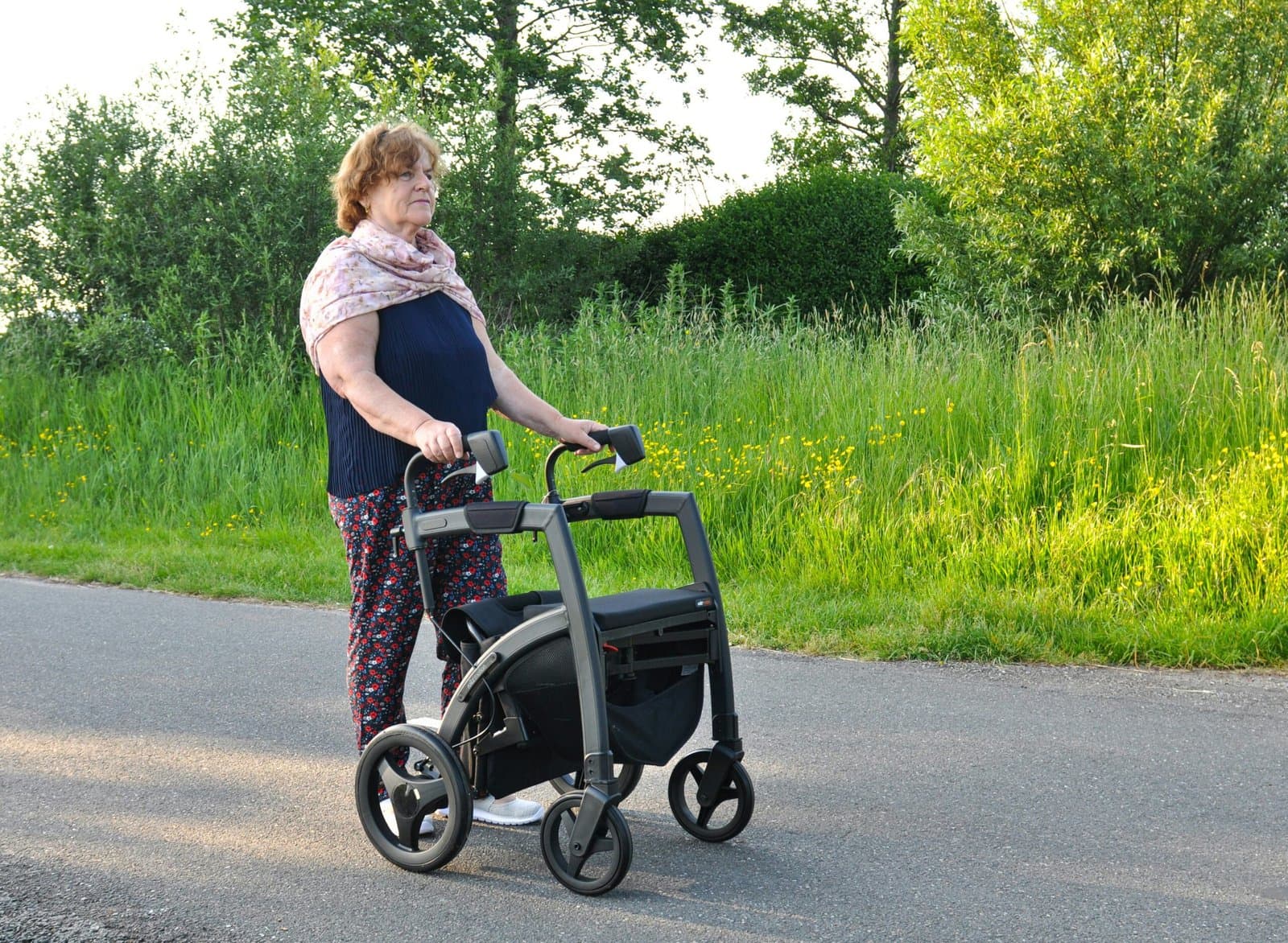
Walker/rollator (especially if endurance and balance are challenges)
-
AFO brace (often used for foot drop)
-
Wheelchair or scooter (for energy protection, longer distances, safe mobility)
MSAA specifically mentions wheeled mobility as one aspect of navigating MS mobility challenges.
The right tool doesn’t make you “worse.”
It makes your life bigger.
Supportive Walking Tips You Can Start Using Today
Here are small changes that can make walking feel safer immediately:
In your home:
-
Remove throw rugs or use non-slip pads
-
Keep walkways clear (shoes, cords, clutter)
-
Add night lights to reduce fall risk
-
Keep frequently used items within easy reach
In public:
-
Choose supportive shoes with grip
-
Use railings even if you “don’t need them”
-
Avoid rushing (especially in parking lots and crosswalks)
-
Take breaks before you feel shaky
In your body:
-
Stretch for 2–5 minutes before walking
-
Drink water (dehydration can worsen fatigue)
-
Walk in shorter intervals
-
Rest without guilt
Walk-Safe Checklist for MS Walking Problems ✅
Use this quick checklist before you leave the house or even before you move around inside:
Before walking:
-
I’m wearing supportive shoes (not slippery socks)
-
My path is clear (no clutter, cords, rugs)
-
I have my mobility aid if I need it
-
I’ve done 1–2 minutes of gentle movement or stretching
-
I’m not overheating (or I have a cooling plan)
While walking:
-
I’m walking slower than my brain wants to (and that’s okay)
-
I’m focusing on stability, not speed
-
I’m using handrails / support during stairs or turns
-
I’m not multitasking while walking
-
I’m taking breaks before my legs feel shaky
After walking:
-
I’m resting before I crash
-
I’m rehydrating
-
I’m noticing what helped (or what triggered symptoms)
When to Talk to Your Doctor or Physical Therapist
If walking has changed recently, more falls, more stumbling, more weakness, more fear, it’s worth bringing up.
Experts recommend asking your physician for a PT referral for individualized gait assessment and safety strategies.
Especially talk to your care team if:
-
You’ve fallen more than once
-
You feel unsafe walking alone
-
Your foot drag is worsening
-
Stairs are becoming difficult
-
You feel a sudden change that’s not improving
You deserve support, not guesswork.
Walking With MS Can Change, But You Still Deserve Freedom
Walking problems in multiple sclerosis can feel like a constant negotiation. Some days you’re steady. Other days you feel cautious and unsure. And sometimes the emotional part, the fear, the frustration, the grief, hits just as hard as the physical symptoms.
But here’s what I want you to remember:
You don’t have to “wait until it’s bad enough” to get support.
You don’t have to prove anything by struggling.
You can use tools. You can rest. You can adapt.
And you can still live a full life while doing it.
Every safe step counts.
Recent Posts

Mobility Devices for MS Fatigue: What Helps Most
MARCH 26, 2026

MS Mobility Devices: A Beginner’s Guide to Mobility and Home Supports
MARCH 25, 2026

Confidence With Multiple Sclerosis: Rebuilding Self-Trust
JANUARY 25, 2026

Multiple Sclerosis Symptoms: Early Signs, Invisible Challenges & Daily Changes
JANUARY 16, 2026
Living with Multiple Sclerosis: What Daily Life Can Look Like
DECEMBER 15, 2025